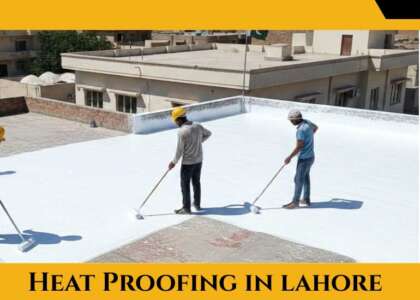

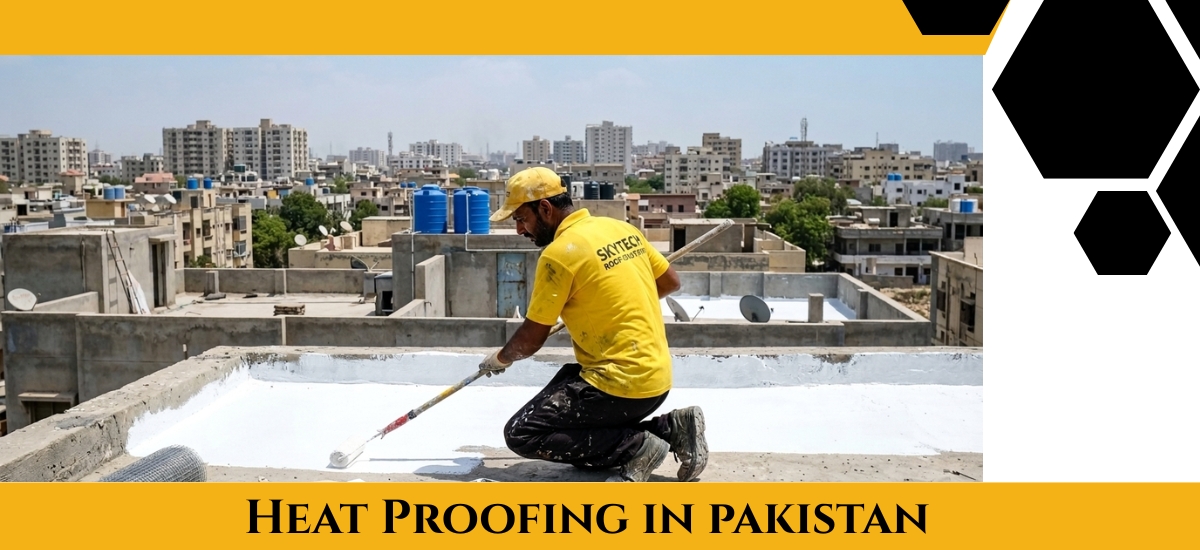
Pakistan experiences extremely hot summers, especially in cities like Lahore, Karachi, and Multan where temperatures frequently exceed 40–45°C. Concrete roofs absorb intense heat during the day and release it into the building at night, making indoor environments uncomfortable and increasing electricity consumption.
Because of this, heat proofing in Pakistan has become a popular and effective solution for homeowners, commercial buildings, and industrial facilities.
What is Heat Proofing?
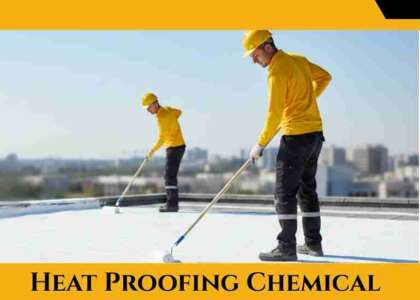
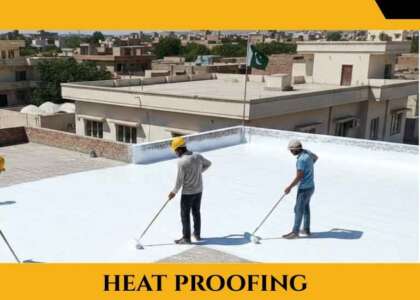
Heat proofing is the process of applying specialized reflective and insulating coatings on roofs to reduce heat absorption from sunlight. These coatings create a protective layer that reflects solar radiation and prevents heat from entering the building.
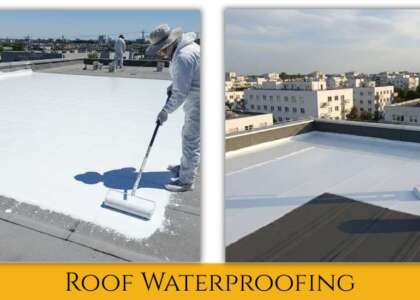
Heat proofing solutions usually also provide waterproofing, protecting roofs from rain damage during the monsoon season.
Why Heat Proofing is Important in Pakistan
1. Extreme Summer Temperatures
Cities like Lahore often experience intense heat waves. Heat proofing coatings can reduce roof surface temperature by 10–15°C.
2. Lower Electricity Bills
By reducing indoor temperatures, air conditioners run less frequently, lowering monthly energy costs.
3. Roof Protection
Continuous heat expansion and contraction can cause roof cracks and structural damage. Heat proofing chemicals protect against this.
4. Waterproofing Benefits
Many heat proofing coatings also act as waterproof membranes, preventing water leakage during monsoon rains.
Types of Heat Proofing Solutions in Pakistan
1. Acrylic Heat Proofing Coating
Acrylic coatings are one of the most common residential solutions.
Benefits
-
Affordable
-
Environmentally friendly
-
UV resistant
-
Easy to apply
Best for: Homes and small buildings.
2. Elastomeric Heat Proofing Coating
Elastomeric coatings are flexible and expand or contract with temperature changes.
Benefits
-
Crack resistance
-
Excellent waterproofing
-
Long lifespan
Best for: Commercial buildings.
3. Bitumen-Based Heat Proofing
Bitumen coatings are thicker and provide strong waterproofing protection.
Benefits
-
Durable membrane
-
Strong adhesion
-
Good heat resistance
Best for: Industrial roofs.
4. Polyurethane Heat Proofing
Polyurethane coatings are considered premium solutions.
Benefits
-
High durability
-
Chemical resistance
-
Superior waterproofing
Best for: Factories and warehouses.
How Heat Proofing Works
Heat proofing coatings control temperature using three mechanisms:
-
Solar Reflection – Reflects UV and infrared rays.
-
Thermal Emission – Releases absorbed heat quickly.
-
Insulating Layer – Reduces heat transfer through the roof.
Together, these mechanisms significantly reduce indoor heat.
Heat Proofing Application Process
Step 1: Roof Inspection
Professionals inspect the roof for cracks, leakage, and structural damage.
Step 2: Surface Cleaning
Dust, debris, and oil are removed for proper adhesion.
Step 3: Crack Repair
Damaged areas are sealed using crack fillers or sealants.
Step 4: Primer Application
Primer improves bonding between roof and coating.
Step 5: Heat Proofing Coating
Two to three layers of coating are applied using roller or spray.
Step 6: Drying and Curing
The coating usually takes 24–48 hours to cure completely.
Average Lifespan of Heat Proofing
| Type | Average Lifespan |
|---|---|
| Acrylic | 3–5 years |
| Elastomeric | 5–8 years |
| Polyurethane | 8–12 years |
Regular maintenance can extend the life of the coating.
Maintenance Tips After Heat Proofing
-
Clean the roof twice per year
-
Inspect for cracks annually
-
Avoid placing heavy objects on the coated surface
-
Reapply coating when signs of wear appear
Signs Your Building Needs Heat Proofing
-
Rooms feel hotter than outside
-
AC runs continuously
-
Visible roof cracks
-
Water stains on ceilings
-
Mold or damp patches
Benefits of Professional Heat Proofing Services
Professional contractors ensure:
-
Proper surface preparation
-
Correct coating thickness
-
Long-term durability
-
Warranty coverage
DIY solutions often fail due to improper application.
Environmental Benefits
Heat proofing in Pakistan also contributes to sustainability by:
-
Reducing electricity consumption
-
Lowering carbon emissions
-
Minimizing urban heat island effects